
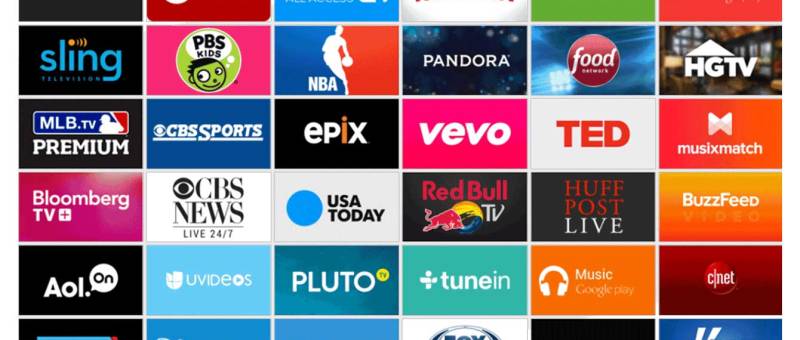
New 5G Services Could Accelerate Cord Cutting in 2019

The rate of consumers dropping their cable and satellite TV packages hit the highest level ever in the fourth quarter of 2017, while Internet TV subscribership grew strongly.

According to analysts at Moffett Nathanson Research, the total number of pay-TV subscribers in Q4 dropped 3.4% from a year earlier, the highest rate of decline since the trend of cord cutting emerged in 2010, with almost 500,000 customers leaving in the fourth quarter alone, that leaves the industry with about 83 million cable households.

These calculations don’t include the growing number of households that never subscribed to a pay TV service in the first place, AKA: “Cord Nevers”. Over half of cord nevers are millennials, ages 18 to 34, but just 35 percent of cord cutters are millennials.

The cable bundle has become increasingly unappealing as consumers have turned to more flexible and less expensive video offerings, disrupting the traditional cable TV model, like Netflix and Hulu that feature traditional TV and movie formats, to shorter programming from YouTube, Facebook, and Snapchat.

But offsetting the shift is the growing number of people signing up for packages of TV channels delivered over the Internet by services like Google’s YouTube TV, Dish Network’s Sling TV and AT&T’s DirecTV Now. At about $20 to $50 per month, the online offerings are considerably cheaper than the average cable TV bundle.

Later this year Verizon, T-Mobile, and AT&T will all be launching 5G networks creating real competition among home internet services. Instead of having one or two options to choose from, consumers will have 5 or more broadband services options, driving a new wave of cord-cutting as consumers continue to unbundle internet services from their local cable company.

12 Big Trends Shaping the Future of Digital Advertising

Mary Meeker presented the most anticipated Powerpoint deck of the year at the annual Recode Code Conference last Wednesday. Below are the big trends she highlighted that will shape the future of digital advertising.

  1. Mobile Growth May Have Peaked
    2017 was the first year in which smartphone unit shipments didn’t grow at all. As more of the world become smartphone owners, growth has been harder and harder to come by. The same goes for internet user growth, which rose 7 percent in 2017, down from 12 percent the year before.
  2. Digital Time Spent is Increasing
    People, however, are still increasing the amount of time they spend online. U.S. adults spent 5.9 hours per day on digital media in 2017, up from 5.6 hours the year before. Time spent on mobile has reached 3.3 hours a day, which is more than double from 1.6 hours in 2012.
  3. Search is Evolving
    49 percent of product searches now start at Amazon—36 percent start on a search engine. What’s more, Amazon is better poised to capitalize on those searches with features like one-click purchasing, which encourage consumers to use Amazon to fulfill orders that result from those searches. Search engines and content sites do a better job of inspiring consumers to want things.
  4. The Lines are Blurring Between Ads, Products, Content & Transactions
    Online browsing is evolving into buying, fueled by social media. Facebook leads the way with 78 percent of survey respondents saying they have discovered products on the platform, followed by Instagram and Pinterest with 59 percent, Twitter with 34 percent and Snap with 22 percent. What’s more, 55 percent of respondents said they have purchased a product online after a social media discovery.
  5. Google is Shifting to E-commerce as Amazon Shifts to Search
    Google is expanding from an ads platform to a commerce platform via Google Home Ordering. Meanwhile, e-commerce giant Amazon is moving into advertising.
  6. Voice is Going Mainstream
    Voice-controlled products like Amazon Echo are taking off. The Echo’s installed base in the U.S. grew from 20 million in the third quarter of 2017 to more than 30 million in the fourth quarter.
  7. E-Commerce Growth is Accelerating
    E-commerce sales growth is continuing to accelerate. It grew 16 percent in the U.S. in 2017, up from 14 percent in 2016. Amazon is taking a bigger share of those sales at 28 percent last year. Conversely, physical retail sales are continuing to decline.
  8. Subscription Services Continue to Grow
    They’re seeing massive adoption, with Netflix up 25%, The New York Times up 43%, and Spotify up 48% year-over-year in 2017. A free tier helps to accelerate conversion rates.
  9. Data Driven Experiences Create a Privacy Paradox
    Advertising and usability improvements driven by data create what Meeker calls a privacy paradox: Advertising and services are made better thanks to user data, users engagement and value is increased, and regulators want to ensure user data is not used improperly. Technology-driven trends are changing so rapidly that it’s rare when one side fully understands the other, setting the stage for reactions that can have unintended consequences
  10. Print Media Continues to Decline
    Since 2011, the share of U.S. media consumption that happens in print has dropped about 40 percent. But the share of American ad dollars that go to print has dropped more than 60 percent.
  11. Disruption is Accelerating
    The speed of technological disruption is accelerating. It took about 80 years for Americans to adopt the dishwasher. The consumer internet became commonplace in less than a decade.
  12. Ai Will Continue to Evolve
    Internet leaders like Google and Amazon will offer more artificial intelligence service platforms as AI becomes a bigger part of enterprise and advertising spending.

Here are the slides:

Google Names Programmatic Video Marketplace Partners: HGTV, Food Network and Travel Channel On Board


Last summer Google introduced Google Partner Select, a service allowing marketers to buy ads in “premium” online video content.

Now some big-name partners are signing on. Google on Tuesday said 30 media companies and 20 brand advertisers had agreed to transact via the exchange, including CBS Interactive, Fox News, Discovery Communications and Scripps Networks.

Google’s pitch to marketers is that with Google Partner Select they can buy inventory from a host of top video sites, using data for targeting purposes. Implicit in that pitch is that these marketers will avoid the low-quality and fraudulent inventory on other exchanges.

Marketers are rapidly embracing buying Web video advertising using more automated, data-driven tactics, according to Neal Mohan, Google’s vice president of video and display advertising,

“What we are seeing is the power of premium with programmatic buying,” Mr. Mohan said. “That’s something that [brands have] been very excited about.”

Of course, Google is also going after the TV advertising marketplace by directly selling Web video ad packages on YouTube via a more traditional TV-like approach (that isn’t entirely automated)–a program called Google Preferred. Mr. Mohan doesn’t see any conflict between those two trends.

“I don’t think they are mutually exclusive,” he said. “We’ve seen incredibly strong demand for Google Preferred, with brands buying in an upfront mode, and incredibly strong demand on the programmatic side. Brands are going to be looking to do both.”

As for the ad space available on the exchange, Google doesn’t offer many specifics but claims the inventory comes from a variety of content types, including everything from Web video news clips to live sports to full episodes of shows. (YouTube is not part of Partner Select.)

“We’ve gone after brand name, household name media partners on an exclusive basis,” Mr. Mohan said. “You have to remember the reason why this is attractive for publishers. They are trying to create incremental, high quality demand. Our publisher partners have not viewed this as a way to sell stuff they couldn’t sell upfront. In some cases, you are seeing this as a way for publishers to create pseudo private exchanges. We are not giving away keys to the kingdom.”

More