
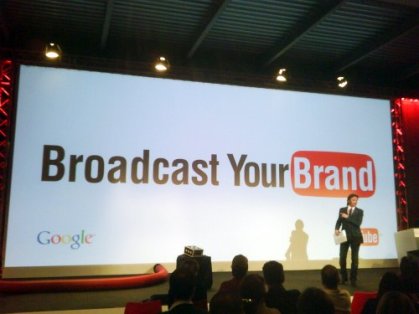
Big Advertisers Bet Big Bucks on YouTube

If you needed a sign of just how audacious YouTube’s $100 million experiment in original content is, consider the asking price for advertisers: as much as $62 million for the exclusive on a package of “channels” in categories such as music or pop culture.

No one has paid that yet. Early deals are in the $5 million to $10 million range, but the aggressive asking price reflects the ambition for YouTube’s 96 premium “channels,” designed to bring to the site TV-like appointment viewing, as well as TV-like advertising dollars.

A smattering of the nation’s biggest marketers have signed on, including Unilever, which is sponsoring “Young Hollywood Network,” founded by well-known YouTube star R.J. Williams, Toyota, which is backing a host of channels targeted at women, including “Cafe Mom,” “Kin Community” and “Mom’s View,” and GM, which signed on last week to sponsor Red Bull’s action sports channel and a package of automotive-focused channels. Chrysler, AT&T and Lowes are also appearing on channels that have already been launched.

YouTube started conversations with brands and agencies in November in hopes of persuading them to part with chunks of their TV advertising budgets on a site once known for cat videos.
But there was a catch: To get exclusivity in the premium channels, buyers also had to make a huge investment across the rest of YouTube. While deal terms varied, it was typical for YouTube to guarantee that just 20% of the ads would appear in the new channels, with the rest running in other videos on YouTube.

“YouTube is a pretty vast place,” said one buyer familiar with the terms. “You are spending an awful lot of money on things that are nontargeted.” The terms reflect how YouTube hopes to use the channels — some fronted by celebrities or produced by major studios — to bring brand dollars into the rest of the site, which is a bit like the Wild West, with a wide variation in quality.
By making the sponsorships of channels and packages of channels exclusive, YouTube aims to ignite a frenzy among marketers afraid of being left out.

According to a rate card distributed to ad agencies, two hot verticals — music and pop culture — were $62 million apiece for one-year sponsorships, a package of sports channels was $40 million, an autos package was $16 million and a mom’s interest package $10 million. YouTube has since subdivided the verticals into smaller packages in categories such as “Celebrity News,” “Music and Film” or “Geeks, Gadgets and Games,” which cost $10 million to $20 million to sponsor. YouTube also lets advertisers exclusively sponsor a single channel for anywhere from $2 million to $4 million on an annual basis.

None of the megapackages have sold, but GM and Toyota’s deals are thought to be well north of $10 million for packages of channels, while Unilever is in the $5 million range for “Young Hollywood,” one of the channel partners with a long history of producing popular celebrity programming on YouTube.

The deals work out to $15 to $25 per thousand views, competitive with broadcast TV ad rates. At a low-end sponsorship cost of $500,000 a month, an advertiser would need roughly 25 million impressions to net a $20 CPM — unlikely for most startup channels.

Channel producers will make money from ad impressions that run on the videos they create or curate within the channel, but only after YouTube recoups its initial investment in them, which ranges from a few hundred thousand to $5 million. Those deals were also struck on a variety of terms, but the expectation for most is that they will clear their advances back within a year. After that, YouTube will split revenue 50-50.

The early advertisers are also big TV spenders, and while most have ad budgets devoted to digital, spending at these levels will inevitably mean shifting some dollars that once went to TV.
“In a world of finite marketing budgets, you do this in place of doing something else,” said David Cohen, chief global digital officer of Interpublic Group’s Universal McCann. Mr. Cohen has been in talks with YouTube for several clients.

The biggest obstacle to getting TV ad dollars is keeping viewers’ attention longer. Google VP-Content Robert Kyncl said in January that YouTube users were spending 30 minutes a day with the service, up from an average of 15 minutes in May. That’s still a far cry from the more than average five hours Americans spend watching TV.

It’s enough time that an advertiser like GM, which spent $240 million on Internet display advertising in 2010 (and nearly $1.2 billion on TV) according to Ad Age DataCenter, must place a bet there. “When you have this much fragmentation taking place among audiences, its important that you touch all channels,” said GM spokesman Tom Henderson. “We don’t think one medium will replace another anytime soon.”

Google is expected to capture $2.58 billion in display-ad revenue in 2012, or about 16.5% of the overall market, according to a recent estimate from eMarketer. In an estimate last spring, Citibank said YouTube revenue would exceed $1 billion in 2012.


Read Full Article

Cable Companies Prepare for Battle with Digtial Competition

America’s largest cable operator and largest online video company are heating up the battle for the country’s eyeballs.

Comcast is rolling out a new streaming on-demand offering called Xfinity Streampix, which will bring thousands of TV re-runs and older movies to subscribers of its high-end double- and triple-play packages. For those who subscribe to more basic packages, the streaming service will be priced at $4.99 above their current rate.

Cable companies are fighting for dominance in an increasingly crowded field of competitors, among them Netflix, Hulu, Dish Network, DirecTV, Verizon Inc. and Amazon.com.

Importantly, Comcast has no plans to make Streampix available as a standalone service: To get it, you must be subscribed to Comcast’s cable TV service. That means so-called cord-cutters, or Internet-only subscribers, need not apply. But the Xfinity Streampix offering can be seen as a direct competitor to streaming services like Netflix and Hulu Plus.

Over the past few years, there’s been some debate about whether those services could be cable killers, but lately it’s been mostly accepted that they serve more as a complement to user’s existing pay TV services. Now, Comcast is making a good amount of similar content available through its own service, at a price that’s lower than the $7.99 those streaming services charge, and even giving it away to its highest-paying subscribers. That means Comcast subscribers could have less reason to pay for an additional streaming service.

Comcast will be launching the service later this week, adding thousands of movies and TV episodes to its already expansive library of streaming content available through XfinityTV.com and on its XfinityTV iPad app. To launch the service, Comcast has done deals with Disney, NBC Universal, Sony Pictures, Warner Bros. and Cookie Jar (which does kids programming like Inspector Gadget and Paddington Bear).

While Comcast’s XfinityTV offering has always had recent episodes of broadcast TV shows through a distribution deal with Hulu and CBS, the new service will expand its library by making available older, back-catalog content. At launch, StreamPix content will include previous seasons of TV shows like 30 Rock, The Office, Grey’s Anatomy and Lost, as well as movies such as Brokeback Mountain, Ocean’s Eleven and The Big Lebowski. A Comcast spokesperson told me that the company plans to add more titles as time goes on.

Comcast will also be making the service available on multiple screens: In addition to putting Streampix on the web and on its Xfinity iPad app, the titles will be on Comcast’s cable VOD platform. It’s also planning to expand availability to “additional screens and devices” as time goes on, which will include Microsoft’s Xbox 360 and Android devices. Comcast may be the first cable provider to offer a competitive product, but they certainly won’t be the last. Stay tuned…

TV Upfront Inspires Digital Copycat

The TV Upfront may be the biggest week of the year in television: five days in May when television stars and network executives converge in New York to tout their hot new shows for advertisers.

Now, online video wants its turn. This April the biggest online media outlets—including Google Inc. and its YouTube site; Yahoo Inc.; Hulu LLC; AOL Inc., and Microsoft Corp.—are planning a two-week event in New York. Each company will take a different day to woo advertisers by presenting different marketing opportunities such as revealing plans for coming video programming.

Coming as more companies are creating more original video programming specifically for the Web, the event signals an intensifying effort by the online video world to challenge television.

The event is dubbed “Digital Content New Fronts,” a not-so-subtle reference to the “upfront” name for television’s week of glitzy presentations and lavish parties. The upfront is a prelude to weeks of negotiations with advertisers about purchase of ad time for the coming fall season. After last year’s upfront, advertisers committed to spend $9.3 billion on the broadcast networks, the lion’s share of networks’ prime-time ad inventory, estimates John Janedis, an analyst at UBS Securities.

TV drew $60.7 billion in advertising last year, estimates eMarketer. In contrast, ad spending on online video in the U.S. totaled only $2.02 billion— but it was up 55% from 2010. More than 100 million Americans watched online video content on an average day, a 43% increase from the year prior, according to comScore.

“There is a big gap between the time consumers are spending on digital platforms and the amount of ad spend” that the business is seeing, said Mickie Rosen, senior vice president of Yahoo Media Network.

The online video ad market needs to be better organized to make it easier for marketers to buy spots, said Mr. Kinsella. Online media outlets hope that by aligning their efforts they have a better chance of persuading advertisers to commit early to online ad packages—just like for TV. Most online ad packages are bought closer to when they appear.

Getting advertisers to commit in advance will give digital companies better visibility of what revenue will be and allows them to invest with more confidence in new programming, said Yahoo’s Ms. Rosen.

This was a “natural opportunity for us to sit together and think how we can push the industry forward,” said Janet Balis, head of sales.

Read Full Article

Web TV’s New Lineup

Hollywood veteran Brian Robbins has a new production studio under construction and 35 shows in development. There’s a sitcom set in a high-school bathroom, a talk show modeled on “The View” but hosted by young Twitter celebrities and a series about an outlandish teen wrestling league.

Mr. Robbins, a producer and director known for Eddie Murphy movies and TV shows including “Smallville,” plans to produce 120 hours of teen programming this year, all of it destined exclusively for the Web.

Mr. Robbins is part of a teeming new ecosystem, as some of Hollywood’s biggest names—with support from Silicon Valley’s deepest pockets—are racing to create new shows, and in some cases, dozens of them, for the Web. A former NBC programming chief is launching three YouTube channels in the coming months. The creator of the CBS juggernaut “CSI” is filming a series of YouTube thrillers. Stars like Tom Hanks and Kevin Spacey are at work on new shows for Yahoo and Netflix.

For veterans of movie studios and TV networks, the Web beckons as a creative playground, unhindered by studio control and the threat of swift cancellation. Show creators often own the content they create for the Web, which means they’re free to spin off their concepts later for movies or traditional TV shows—and could stand to gain a bigger share of the profits if a project takes off. Perhaps most importantly, no one wants to be left behind in a shift that could represent the future of television.

Google, which owns YouTube, is paying an array of producers, from seasoned pros like Mr. Robbins to self-made Web stars, to create 100 new video “channels.” Google is giving each channel up to $5 million in funding, according to people familiar with the deals. The first channels began launching last month, and more will continue rolling out through the summer.

Hulu this week premiered its first scripted series, “Battleground,” about staffers backing an uphill Senate campaign in Wisconsin; it will be followed by an off-kilter travel show from “Dazed and Confused” director Richard Linklater. For the spring, Yahoo is developing “Electric City,” an animated series about a dystopian society of the future, co-produced by Mr. Hanks, who will also voice a character. Yahoo is already rolling out about 20 original shows each month, mostly short-form reality shows.

Yahoo’s programming choices are often driven by data, says Ross Levinsohn, the company’s executive vice president of the Americas. After tracking the torrent of clicks that news stories about wedding engagements routinely get, Yahoo commissioned “The Ultimate Proposal.” In each episode of the reality show, which Yahoo says has attracted 11 million total views since its premiere last October, a host “helps single people from all across America step up, take a knee and deliver the marriage proposal of a lifetime.”

Netflix is trying to lure monthly subscribers and brand itself as a home for boutique programs—as HBO once did—with series such as “Lilyhammer.” An offbeat drama about an American mobster (Steven Van Zandt) abroad in Norway, it launched earlier this month. Coming next to Netflix: “House of Cards,” a drama produced by David Fincher and starring Mr. Spacey as an ambitious politician, and a revival of the cult TV comedy “Arrested Development.”

Despite the influx of big-name talent, it’s always hard to predict what will catch fire online—a homemade video of a precocious pet or amateur singer can command the kind of viewer numbers that network executives only dream of. As a result, some of the TV veterans crossing into the Web are forming partnerships with self-made Web stars, hoping to leverage their expertise and fan bases.

YouTube hopes that official channels offering a steady flow of content and consistent quality will compel advertisers to spend more than they would on typical YouTube fare. In addition to the familiar pre-roll advertising that runs before a video, YouTube’s team is pursuing channel sponsorships and deals to create Web shows around products. Channel creators will receive a majority cut of any advertising revenue, but only after Google recoups its investment in the channel.

Google, YouTube, Yahoo, Hulu and other major media companies will present their new shows to advertisers in an April event similar to television’s traditional “upfront.”

The Web channels will be measured by a more direct set of data, including the view counter displayed under every video on YouTube. Each channel also displays a “subscribers” figure, the number of viewers who click a button to be notified by email when new videos go up.

YouTube is gathering metrics on the channels’ prospects before they even launch, said Robert Kyncl, Google’s global head of content. YouTube managers score each channel on factors such as long-term marketing plans and cross-promotion planned with other channels. These status reports are color-coded on a sort of spreadsheet. Looking at green, yellow and red flags on this “heat map,” Mr. Kyncl can track signs of trouble—literal red flags—across all 100 channels. If a channel fails to attract viewers, those color grades could eventually indicate when it’s time for YouTube to pull its support. “Once it’s all green and it’s still not working, then sometimes it’s just that the idea was not good. There will be cases like that,” Mr. Kyncl said.

Read Full article on WSJ.com

The Death of Television is Greatly Exaggerated


National advertisers believe that television advertising has become more effective, according to a new study, and many are allotting more of their media budgets to TV.

In a new report from Forrester Research, the number of national advertisers who say TV advertising has become more effective in the past two years has tripled.  They said that TV advertising will account for 47% of their media budgets, a 6% increase from the 2010.

The advertisers in the study said they were interested in data other than Nielsen when it comes to TV, with 72% expecting the quality and accuracy of set-top-box data to improve over the next few years.

Almost half of the advertisers surveyed said they are testing or planning to test advanced TV advertising, including addressable ads. They are also doing second-screen advertising, with 18% running synchronized ads on TV and online and another 31% saying they will try that strategy in 2012.

Digital Video Advertising Heating Up

FreeWheel has published its latest quarterly Video Monetization Report, which indicated that viewers continue to accept an increased number of ads in order to view long-form content (20+ minutes).
In fact, there are now nearly seven video ads per long-form video, which is more than double the ad load from early 2011. In addition, Mid-roll video ad placements witnessed the biggest growth in 2011.

The report analyzed more than 45 billion video views and nearly 28 billion ad views, based on aggregated data from FreeWheel’s customers including: ESPN, Discovery, AOL, VEVO, Turner, FOX, CBS, A+E Networks and more. Here are some other interesting findings:

From Q1 to Q4, video viewing grew 47% while ad viewing grew 49%. However, the ratio between the two has recently narrowed: by Q4, three-fourths of all digital video content had a video ad associated with it, up from just over half in Q1.

The iPad has its own viewing dayparts distinct from other wireless devices and wired/broadcast viewing: an early primetime during the morning commute (7am to 10am) and a second primetime between 9pm and 11pm.

Professional video viewing dipped in Q4, partly due to seasonal viewing patterns and a dearth of new, professionally produced content showing up in linear and digital markets.

Young People Are Watching, just Less Often on TV

Television is America’s No. 1 pastime, with an average of four hours and 39 minutes consumed by every person every day. But more and more young people are tuning in elsewhere.

Americans ages 12 to 34 are spending less time in front of TV sets, even as those 35 and older are spending more, according to new research released by Nielsen.

The divide along a demographic line reveals the effect of Internet videos, social networks, mobile phones and video games — in short, all the alternatives to the television set that are taking up growing slices of the American attention span. Young people are still watching the same shows, but they are streaming them on computers and phones to a greater degree than their parents or grandparents do.

It has long been predicted that these new media would challenge traditional television viewing, but this is the first significant evidence to emerge in research data. If the trends hold, the long-term implications for the media industry are huge, possibly causing billions of dollars in annual advertising spending to shift away from old-fashioned TV.

The television industry has been expecting — and dreading the day — that TV viewing peaks, and then either plateaus or slowly declines in the face of encroaching Internet and phone use. According to Nielsen, television viewing as a whole is steady, in part because older Americans — particularly those over the age of 65 — are watching more than ever before. Digital video recorders deserve some of the credit for the uptick, since they let people stockpile shows.

But for three straight quarters, there have been declines in viewing among Americans under 35, even when DVR viewership is factored in.

Adults ages 25 to 34, for instance, watched about four and a half fewer hours of television in the third quarter of 2011 than at the same time in 2010 — the equivalent of about nine minutes a day. Viewers ages 12 to 17 also watched about nine fewer minutes a day. The demographic in between, those ages 18 to 24, watched about six fewer minutes a day.

As behaviors shift, there is likely to be a scramble to identify winners and losers. Viacom, the owner of Nickelodeon, criticized Nielsen last fall after ratings showed that the channel suffered from a sudden drop in children’s viewing.

According to data for the first nine months of 2011, children spent as much time in front of the television set as they did in 2010, and in some cases spent more. But the proportion of live viewing is shrinking while time-shifted viewing is expanding.

Zach Dulli, a director of operations for the National Council for Geographic Education in Washington, has noticed that his children, Max and Huck, like the TV set, but they like laptops and cellphones more. Now that Huck has mastered the finger swipe to turn on an iPad, Mr. Dulli and his wife, Stephanie, prepare “Baby Einstein” for him to watch on the device. Huck is eight months old.

“To us, TV is separate from the other media we use,” Mr. Dulli said. “To my sons, it’s not.”

Read Full Article

Animal Planet Scores Big with Puppy Bowl

Animal Planet scored big with the Puppy Bowl VIII on the web and on social media. Aside from attracting 8.7 million unique total viewers over the 12-hour marathon, Animalplanet.com recorded its best day ever in terms of web traffic, generating 5.5 million page views and 1.4 million videos streamed.

Puppy Bowl VIII ranked as the top social cable television show on Sunday, and was second overall behind Super Bowl XLVI, according to the network.

A Twitter handle created for the Bowl’s “sideline reporter,” attracted over 21,000 new followers in one day. Overall, the show generated over 200,000 tweets on Sunday, with several hashtags (including #puppybowl and #animalplanet) trending worldwide on Twitter.

Disney Comcast Deal paves the way for TV Everywhere

A renewal of the agreement between Disney and Comcast has extended the cable company’s “TV Everywhere” model, allowing it to offer customers access to “70 services” including all the ABC, Disney and ESPN channels you can name on their TVs, computers and mobile devices. Comcast’s blog post notes this access extends both in and outside of the home, a major sticking point for most of the live TV streaming apps offered by cable and satellite companies (with the obvious exception of Dish Network and its Sling integration) so far. Other news mentioned in the press release is that the ABC video on-demand access on Comcast’s cable boxes is fast-forward disabled — no ad skipping. Other than the existing WatchESPN which Comcast customers will now have access to, there are also WatchDisneyChannel, WatchDisneyXD and WatchDisneyJunior services on the way, a part of disney’s own multiscreen initiative called TV+. One other note is that for the first time the deal covers retransmission fees for ABC-owned local stations, which used to be free.