
12 Big Trends Shaping the Future of Digital Advertising

Mary Meeker presented the most anticipated Powerpoint deck of the year at the annual Recode Code Conference last Wednesday. Below are the big trends she highlighted that will shape the future of digital advertising.

  1. Mobile Growth May Have Peaked
    2017 was the first year in which smartphone unit shipments didn’t grow at all. As more of the world become smartphone owners, growth has been harder and harder to come by. The same goes for internet user growth, which rose 7 percent in 2017, down from 12 percent the year before.
  2. Digital Time Spent is Increasing
    People, however, are still increasing the amount of time they spend online. U.S. adults spent 5.9 hours per day on digital media in 2017, up from 5.6 hours the year before. Time spent on mobile has reached 3.3 hours a day, which is more than double from 1.6 hours in 2012.
  3. Search is Evolving
    49 percent of product searches now start at Amazon—36 percent start on a search engine. What’s more, Amazon is better poised to capitalize on those searches with features like one-click purchasing, which encourage consumers to use Amazon to fulfill orders that result from those searches. Search engines and content sites do a better job of inspiring consumers to want things.
  4. The Lines are Blurring Between Ads, Products, Content & Transactions
    Online browsing is evolving into buying, fueled by social media. Facebook leads the way with 78 percent of survey respondents saying they have discovered products on the platform, followed by Instagram and Pinterest with 59 percent, Twitter with 34 percent and Snap with 22 percent. What’s more, 55 percent of respondents said they have purchased a product online after a social media discovery.
  5. Google is Shifting to E-commerce as Amazon Shifts to Search
    Google is expanding from an ads platform to a commerce platform via Google Home Ordering. Meanwhile, e-commerce giant Amazon is moving into advertising.
  6. Voice is Going Mainstream
    Voice-controlled products like Amazon Echo are taking off. The Echo’s installed base in the U.S. grew from 20 million in the third quarter of 2017 to more than 30 million in the fourth quarter.
  7. E-Commerce Growth is Accelerating
    E-commerce sales growth is continuing to accelerate. It grew 16 percent in the U.S. in 2017, up from 14 percent in 2016. Amazon is taking a bigger share of those sales at 28 percent last year. Conversely, physical retail sales are continuing to decline.
  8. Subscription Services Continue to Grow
    They’re seeing massive adoption, with Netflix up 25%, The New York Times up 43%, and Spotify up 48% year-over-year in 2017. A free tier helps to accelerate conversion rates.
  9. Data Driven Experiences Create a Privacy Paradox
    Advertising and usability improvements driven by data create what Meeker calls a privacy paradox: Advertising and services are made better thanks to user data, users engagement and value is increased, and regulators want to ensure user data is not used improperly. Technology-driven trends are changing so rapidly that it’s rare when one side fully understands the other, setting the stage for reactions that can have unintended consequences
  10. Print Media Continues to Decline
    Since 2011, the share of U.S. media consumption that happens in print has dropped about 40 percent. But the share of American ad dollars that go to print has dropped more than 60 percent.
  11. Disruption is Accelerating
    The speed of technological disruption is accelerating. It took about 80 years for Americans to adopt the dishwasher. The consumer internet became commonplace in less than a decade.
  12. Ai Will Continue to Evolve
    Internet leaders like Google and Amazon will offer more artificial intelligence service platforms as AI becomes a bigger part of enterprise and advertising spending.

Here are the slides:
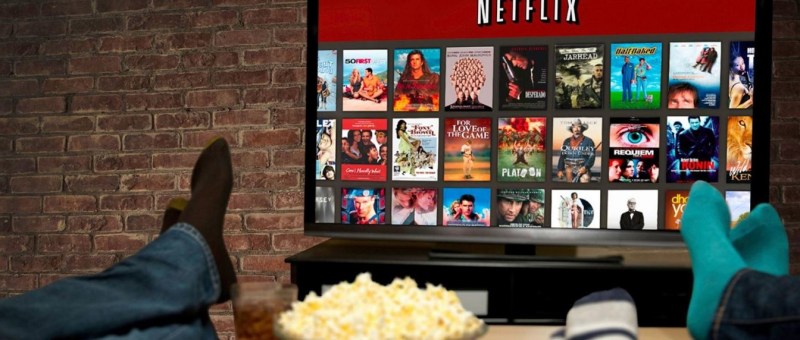
TV Ratings are Falling as SVOD Subscriptions Rise…


TV viewing in the US are on the decline and as TV ratings fall, so does TV advertising revenue, as companies like Fox have experienced this year.

Nielsen’s Q4 “Total Audience Report” released on Wednesday shows a huge drop off in traditional TV viewing as consumers shift their viewing habits from old-fashioned scheduled programming.

American adults still spend a huge amount of time watching TV each day. But the overall levels of viewing (which includes live TV + time-shifted viewing) declined 4.6% year-on-year. That’s compared to a 4.2% year-on-year decline in Q3 and a 2.1% decline in Q2. The level of decline is accelerating.

Excluding time-shifted viewing, total live TV consumption was down 5.5% year on year to 114 billion person-hours of live TV video consumption.

Nielsen time spent with TV

The Nielsen Company

Among younger audiences, the drop off in TV viewing was even more severe: 16% among 18 to 24-year-olds, and 10% among 12 to 17-year-olds.

The steep drop off of traditional TV viewing is correlated with a sharp rise in the number of US homes with access to a subscription video on demand service like Amazon, Hulu, or Netflix. Nielsen says 40% of US homes had access to a subscription video on demand service in Q4 (the pink segment in graph below), up from 36% in the same quarter the previous year.

Nielsen Subscription Video on Demand

The Nielsen Company

Of those with access to video streaming services, Netflix is the most popular option.

Nielsen Netflix Penetration

The Nielsen Company

As you may have noticed from the previous charts, the amount of media consumption per day is actually up as consumers have more choice about the way in which they view content. And the more devices and services they have, the more content they consume.

Nielsen daily screen time

The Nielsen Company

Elsewhere, the amount of time spent on the web and with apps across devices among adults over 18 years old was up 32%, according to estimates from Pivotal Research, which uses Nielsen’s data as a guide. Pivotal says this now equates to 44% of the time spent with TV versus 32% in the year-ago period (although, intriguingly, on Pivotal’s estimates, this represents a sequential decline from 48% in the third quarter.)

An opportunity for TV networks?

hbo now announced at apple event Richard Plepler, CEO of HBO

APHBO CEO Richard Plepler announcing HBO Now at the Apple event on Monday.

Brian Wieser, senior research analyst at Pivotal Research, says in a note: “While declines should level off eventually (and viewing levels would certainly look better if tablets and out-of-home viewing were included in the data; a break-out of viewing of TV content in digital environments would also probably convey something more favorable for legacy providers of TV content), a concern is that if reported viewing levels continue to fall at these levels and if the industry is unable to generally make its case for why advertisers should use the medium, marketers who might otherwise have continued to focus their spending on TV may incrementally look toward other alternatives – namely digital media at a broader level.”

However, Wieser adds that this is a “secondary concern” relative to the broader state of TV advertising, which Pivotal believes is mostly due to the fact that marketers are maintaining tighter cost controls broadly across their entire advertising budgets.

There might be new competitors in the space, but there’s also more ways to get content (and advertising) in front of viewers than ever before — and they’re actively choosing to consume more of it.

And that’s why — as ratings are getting hammered — more and more traditional TV companies are opting to launch streaming services. Most recently, HBO announced HBO Now will be available on Apple devices starting in April.

Read more

Three Trends Digital Marketers Need to Watch.

emarketer
If you’re looking for digital marketing trends for the upcoming year, go to a company that follows the industry trends.
eMarketer just released their report on the key digital trends for 2015. Here are three important trends to keep your eye on:

1) Programmatic will move Beyond Display Advertising

Another tipping point in 2015: programmatic advertising.
We expect programmatic will cross the line to make up
more than 50% of all digital display advertising.
But the story of programmatic will go much further than
display next year.
The same momentum and technologies that have
reshaped how we buy display ads could eventually
transform how we buy all forms of advertising, not
just digital but traditional as well. Programmatic TV, for
example, accounts for less than 1% of all TV ad spending,
but some predict it could be a multibillion dollar industry
within 12 to 24 months as both buyers and sellers use it
to better understand their audiences.
Some forecasts have that number jumping to as much as
20% of all TV spending by 2018. That’s a huge increase,
and even if it’s half or a quarter of that, we’re still talking
about very big money here. Expect the tide to begin to
turn in 2015

2) Cord-Shaving

Yes, some consumers are cutting the cord, but they’re
in the low single digits percentage-wise. A more real
behavior is cord-shaving, where consumers reduce what
they spend, rather than eliminating it altogether.
Individuals in all age groups are still watching a ton of TV
the traditional way, even millennials.
Of course, now that HBO has announced plans to
offer HBO GO as a standalone service, all of that could
change, especially as other networks rush to follow suit.
So, as they say, don’t touch that dial: Unbundling could
accelerate consumers’ latent thirst for cord-cutting.
What that means is you need to pay close attention to
consumers’ shifting video consumption habits.

TV is holding steady. It’s still the media big dog … for now. But
mobile is the channel that’s growing. With all the time,
money and attention flowing to digital video, marketers
that lack deals with content owners and dynamic
advertising are going to miss the boat.

3) Social TV

Consumers regularly use mobile devices while watching TV, but only a small percentage
talk about what they are watching via social media.
TV-related conversations are also fragmented across
platforms, and industry executives are still unsure of the
effect of social media on people’s viewing behaviors or
on ratings.

Consumers aren’t really engaging in social TV marketing
efforts, and marketers are holding back as a result. That’s
not going to change in 2015.

Second Screen Synching Increases Ad Awareness

Second-screen usage distracts viewers from TV advertising, according to a study from TNS Infratest.

Among viewers who used a second-screen device while watching television, TV ad awareness dropped a shocking 58%, compared to TV-only viewers participating in the study.

That said, the research found that new technologies can bolster ad awareness and brand image among those using second screens while watching TV. When new cross-media technology synching the delivery of TV and online ads onto the second screen was used during the study, TV ad awareness increased by more than 40%, creating an uplift among the mobile and tablet users.

“This study again confirms to advertisers that attention is turning away from the TV towards second screen devices, especially during commercial breaks,” said Andreas Schroeter, co-founder and COO of wywy. “Nearly half of the TV viewers use their tablet or smartphone to write emails, read news or surf on social networks while watching TV. New cross-media technologies synching TV and online ads are now proving to be an effective solution in recapturing the viewers’ attention as it diverts to the second screen.”

The study also recorded strong uplifts in key advertising performance indicators such as brand attitude (38%) and word of mouth (18%) when online ad synching technologies were used in tandem with TV advertising.

The company pointed out that a valuable by-product of the synched solution is the immediate feedback channel it provides to the performance of television advertising and its ability to impact online behaviour – a phenomenon that has increased due to the proliferation of second-screen usage in parallel to TV viewing.

Mobile Advertising expected to surpass desktop by 2017

Mobile advertising is growing so rapidly that it will pass desktop advertising by 2017, according to a new report from eMarketer.

Leading the way will be search ads; mobile accounts for 22% of all search ads this year and is expected to grow to 60% by 2017. It was at 2% only three years ago. About half of all spending on display ads will be in mobile’s column by 2017 as well. Other key findings:

Mobile search ads should be worth $4.34 billion this year, up from $3.95 billion in 2012.

Mobile display ads should bring in $3.81 billion in 2013, up from $3.38 billion last year.

Mobile ad dollars overall will more than double from last year to $8.5 billion.

Video-ad revenue on mobile and desktops is expected to hit $4.1 billion this year and rise to $9.2 billon in 2017.

New study shows Moms prefer iPads over iPhone

A new report from mobile-analytics firm Flurry.com, The Who, What, and When of iPad and iPhone Usage, reveals that moms and home-design enthusiasts, are using iPads more than iPhones.

Meanwhile, health and fitness, music lovers, and video enthusiasts are all over the iPhone.

The heaviest period of use for the iPad during the day is from 6 pm to 11 pm; iPhone app usage also peaks during these hours.

Mobile Devices Account for only 2% of TV Viewing

Most folks don’t use their mobile devices for TV viewing. According to a study from the Council for Research Excellence, mobile devices account for just 2% of all TV viewing. However, the group that the study calls “early adopters” and “opinion leaders” are far more active on mobile TV than that. Still, if TV execs want watchers to actually be paying attention to their content, they should hope they are watching on smartphones. Smartphone TV watchers were multitasking on other electronic devices while viewing only 14% of the time while tablet viewers were doing other things 27% of the time and those watching on computers were doing other things 31% of the time.

The number actually goes up on regular old broadcast TVs with viewers multitasking 34% of the time. Another piece of data supporting smartphone viewership as the strongest is that 39% of those viewers looked up show information, posted about the show on social networks or engaged in some other kind of online activity relating to the TV programming. Meanwhile, those who actually watched the show on TV only had 21% of viewership do those things, lower than both tablet viewers (27%) or those that watched on computers (31%).

In Other Words: Focus your mobile efforts on smartphone users.

Time Spent Watching Free VOD TV Content Jumps 40%

The amount of time subscribers spent watching free video on demand television fare soared in 2012, according to the latest findings from measurement company Rentrak.

According to the “Rentrak State of VOD Report 2012,” which reflects four years of platform analysis from Rentrak’s OnDemand Essentials Service, the total amount of time subscribers spent viewing free-on-demand TV content grew 40% in 2012 from 2011’s level.

Moreover, the report found that the total number of free-on-demand TV programs watched went up 29% from the prior year. Relative to broadcast network shows, the percentage gains were even greater, as there was a 60% uptick in total time spent viewing those programs and a 47% advance in the number of those shows watched from the prior year.

High-definition VOD viewing escalated by 60% in 2012, while there was a 5% increase to 43 million TVs that accessed VOD content on a monthly basis. That was up 13% from 2010’s levels, according to the Rentrak study.

Given these numbers, Rentrak officials point to the opportunities for advertisers to reach viewers through VOD mechanisms.

“There is no doubt that this kind of growth is reshaping budgets of cable operators, content providers and advertisers,” said Rentrak corporate president and president of the AMI Division Cathy Hetzel in a statement. “Our reporting gives perspective on how many ad dollars could be left behind if on-demand content is not considered by the planners of TV.”

VivaKi study determines the best Tablet ad formats

The three best ad models for tablets are: banner to full-page rich media, pre-roll with overlay, and rich media interstitial.

This is according to The Pool, a 14-month long research initiative from VivaKi that featured participation from 26 major advertisers and publishers, including Bank of America, Coca-Cola, GM, ABC Television, Crackle, Scripps, Tremor, and Yahoo.

The study uncovered that the three aforementioned ad models “significantly outperformed” their respective benchmarks on at least one of three behavioral metrics (engagement rate, click-through rate, or time spent), and those who engaged with the models saw lifts on all six attitudinal metrics (unaided awareness, aided awareness, mobile ad awareness, message association, brand favorability, and purchase intent).

For example, pre-rolls with an overlay, which the study determined worked best with video content (obviously), generated a 3.3% increase in time spent when compared to a traditional pre-roll video.

Vivaldi study identifies the best Tablet ad formats

The three best ad models for tablets are: banner to full-page rich media, pre-roll with overlay, and rich media interstitial.

This is according to The Pool, a 14-month long research initiative from VivaKi that featured participation from 26 major advertisers and publishers, including Bank of America, Coca-Cola, GM, ABC Television, Crackle, Scripps, Tremor, and Yahoo.

The study uncovered that the three aforementioned ad models “significantly outperformed” their respective benchmarks on at least one of three behavioral metrics (engagement rate, click-through rate, or time spent), and those who engaged with the models saw lifts on all six attitudinal metrics (unaided awareness, aided awareness, mobile ad awareness, message association, brand favorability, and purchase intent).

For example, pre-rolls with an overlay, which the study determined worked best with video content (obviously), generated a 3.3% increase in time spent when compared to a traditional pre-roll video.