
Intel: The New Cable TV

Intel is considering its own online pay-TV service for U.S. consumers.

According to a report from The Wall Street Journal, Intel has been pitching media companies on a plan to create a “virtual cable operator” that would offer U.S. TV channels nationwide over the Internet in a bundle similar to subscriptions sold by cable- and satellite-TV operators. Intel wouldn’t provide Internet access, which subscribers would obtain separately.

In its presentations to media companies, Intel says it is making its own set-top box to carry the TV service, and it has demonstrated an interface for users to browse programs.

Intel plans to launch a service by the end of 2012, though it faces hurdles such as scarce bandwidth and the high price of TV programming.

The new effort would mark a big shift for Intel Chief Executive Paul Otellini, who has made clear his determination to move the company beyond the computer industry. Those efforts so far have include a series of TV-related businesses that have largely failed to gain traction.

Intel’s maneuvers come as the broader television business undergoes a major shift, with people spending more time watching video on the Internet and mobile devices.

Several technology and electronics companies have considered offerings that would use the Internet to deliver bundles of live or on-demand TV channels. In recent months, Sony Corp. and Dish Network Corp. have held exploratory talks about creating such services. Others, including Google, Apple Inc. and Microsoft Corp.

A virtual cable service could theoretically offer smaller or cheaper bundles than traditional cable subscriptions. Intel, for instance, has talked about offering, say, 50 channels, rather than 150, according to one of the people familiar with the matter. But media companies are likely to resist such shifts, at least initially, because they make money by selling big bundles of channels via cable operators.

Internet bandwidth could be another problem. Some tech companies have retreated from plans to become virtual cable operators in part because of an inability to guarantee enough bandwidth for high-quality video at all times of day, one media executive said. Cable operators, which also sell high-speed Internet access, could shift to usage-based Internet pricing if more people start consuming their video online. If that happened, consumers watching a lot of online video could end up paying much more for Internet access—cutting into what a virtual cable operator could reasonably charge its subscribers for a package of channels.

A third issue could be many existing TV channels’ lack of Internet rights to all of their own shows. That would mean some channels on a service like the one Intel is proposing could be reduced, at least initially, to a selection of shows in an on-demand format, rather than live. That could make a Web offering less competitive.
eBay Enters SocialTV Market

Watch With eBay, a feature within eBay’s iPad app that allows users to shop for products related to a TV show they’re watching at that time, will become its own standalone free iPad app. The app lets users enter their zip code, cable provider, channel and TV program they’re watching, and also offers a channel guide, in order to help users search for relevant products and merchandise available on eBay. Other features include the ability to filter out keywords to refine the search process. Another is “eBay Celebrity,” which pulls up featured celebrities’ product recommendations, and presents the option of donating to their chosen charity. TechCrunch reports that some celebrities will also interact with users by way of original content, videos and message boards.

Big Advertisers Bet Big Bucks on YouTube

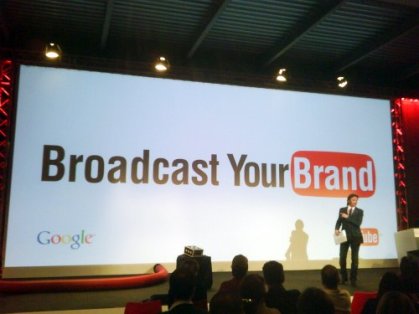
If you needed a sign of just how audacious YouTube’s $100 million experiment in original content is, consider the asking price for advertisers: as much as $62 million for the exclusive on a package of “channels” in categories such as music or pop culture.

No one has paid that yet. Early deals are in the $5 million to $10 million range, but the aggressive asking price reflects the ambition for YouTube’s 96 premium “channels,” designed to bring to the site TV-like appointment viewing, as well as TV-like advertising dollars.

A smattering of the nation’s biggest marketers have signed on, including Unilever, which is sponsoring “Young Hollywood Network,” founded by well-known YouTube star R.J. Williams, Toyota, which is backing a host of channels targeted at women, including “Cafe Mom,” “Kin Community” and “Mom’s View,” and GM, which signed on last week to sponsor Red Bull’s action sports channel and a package of automotive-focused channels. Chrysler, AT&T and Lowes are also appearing on channels that have already been launched.

YouTube started conversations with brands and agencies in November in hopes of persuading them to part with chunks of their TV advertising budgets on a site once known for cat videos.
But there was a catch: To get exclusivity in the premium channels, buyers also had to make a huge investment across the rest of YouTube. While deal terms varied, it was typical for YouTube to guarantee that just 20% of the ads would appear in the new channels, with the rest running in other videos on YouTube.

“YouTube is a pretty vast place,” said one buyer familiar with the terms. “You are spending an awful lot of money on things that are nontargeted.” The terms reflect how YouTube hopes to use the channels — some fronted by celebrities or produced by major studios — to bring brand dollars into the rest of the site, which is a bit like the Wild West, with a wide variation in quality.
By making the sponsorships of channels and packages of channels exclusive, YouTube aims to ignite a frenzy among marketers afraid of being left out.

According to a rate card distributed to ad agencies, two hot verticals — music and pop culture — were $62 million apiece for one-year sponsorships, a package of sports channels was $40 million, an autos package was $16 million and a mom’s interest package $10 million. YouTube has since subdivided the verticals into smaller packages in categories such as “Celebrity News,” “Music and Film” or “Geeks, Gadgets and Games,” which cost $10 million to $20 million to sponsor. YouTube also lets advertisers exclusively sponsor a single channel for anywhere from $2 million to $4 million on an annual basis.

None of the megapackages have sold, but GM and Toyota’s deals are thought to be well north of $10 million for packages of channels, while Unilever is in the $5 million range for “Young Hollywood,” one of the channel partners with a long history of producing popular celebrity programming on YouTube.

The deals work out to $15 to $25 per thousand views, competitive with broadcast TV ad rates. At a low-end sponsorship cost of $500,000 a month, an advertiser would need roughly 25 million impressions to net a $20 CPM — unlikely for most startup channels.

Channel producers will make money from ad impressions that run on the videos they create or curate within the channel, but only after YouTube recoups its initial investment in them, which ranges from a few hundred thousand to $5 million. Those deals were also struck on a variety of terms, but the expectation for most is that they will clear their advances back within a year. After that, YouTube will split revenue 50-50.

The early advertisers are also big TV spenders, and while most have ad budgets devoted to digital, spending at these levels will inevitably mean shifting some dollars that once went to TV.
“In a world of finite marketing budgets, you do this in place of doing something else,” said David Cohen, chief global digital officer of Interpublic Group’s Universal McCann. Mr. Cohen has been in talks with YouTube for several clients.

The biggest obstacle to getting TV ad dollars is keeping viewers’ attention longer. Google VP-Content Robert Kyncl said in January that YouTube users were spending 30 minutes a day with the service, up from an average of 15 minutes in May. That’s still a far cry from the more than average five hours Americans spend watching TV.

It’s enough time that an advertiser like GM, which spent $240 million on Internet display advertising in 2010 (and nearly $1.2 billion on TV) according to Ad Age DataCenter, must place a bet there. “When you have this much fragmentation taking place among audiences, its important that you touch all channels,” said GM spokesman Tom Henderson. “We don’t think one medium will replace another anytime soon.”

Google is expected to capture $2.58 billion in display-ad revenue in 2012, or about 16.5% of the overall market, according to a recent estimate from eMarketer. In an estimate last spring, Citibank said YouTube revenue would exceed $1 billion in 2012.

Read Full Article

Yes, Generations Y and Z are more Connected

There’s a reason that some call those born since the early 1990s the Internet generation.

A new Nielsen study finds that those Americans – along with the Millennials (typically described as born between the early mid-1970s and late 1980s – are the most digitally active and represent a larger portion of those owning smartphones and tablets. They are also among the biggest users of online video and social networks.

Nielsen and NM Incite’s “State of the Media: U.S. Digital Consumer Report,” out today, finds that Americans 18 to 34 – a group that makes up 23% of the U.S. population – consume more digital media than other age groups.

The researchers have coined a new term for these digital consumers, Generation C, which encompasses some Gen Y and Z. “What we think is distinct about them and why we are calling them ‘Gen C’ is their fundamental connectedness,” says Radha Subramanyam, senior vice president of media analytics for Nielsen.

“They have grown up connected to devices and to each other in a really different way than before,” she says. “If you look at all the device usage and what they literally have on their body all the time and how even when they are talking specifically to each other, they are also connecting to others who are not even in the room, through technology, then you start to get a sense of this whole connected, native Internet generation.”

A breakdown of various categories, based on a meta study of Nielsen data in the fourth quarter of 2011:

Smartphones. Among smartphone owners, 39% are 18-34. The next highest age group, those aged 35-49 make up 30% of smartphone owners, followed by ages 50-64 (20%), ages 65-up (6%) and ages 13-17 (6%).

Tablets: 33% of tablet owners are 18-34. The next highest age group, those 35-49 make up 29% of tablet owners, followed by 50-64 (21%), ages 13-17 (11%) and ages 65-up (7%).

Social networks and blogs. Those 35-49 make up 28% of those who visit social networks and blogs, but the 18-34 age group comes in next, making up 27%. Those aged 50-64 make up 22%, ages 2-17 (13%) and ages 65-up (9%).

Online Video: The 35-49 age group nudges out the 18-34 age group again, making up 28% of online video watchers, compared with 27% ages 18-34. Those 50-64 make up 22%, ages 2-17 (14%) and ages 65-up (10%).

TV watching: Young viewers 2-17 tied the 18-34 age group, each making up 23% of TV viewers, followed by ages 35-49 (21%), ages 50-64 (20%) and ages 65-up (14%).

Breaking down digital consumers in other ways, women make up a bigger percentage than men of those who use social networks and blogs (54% to 46%) and watch online video (53% to 47%). Men are more likely to own a tablet, making up 53% of tablet owners; smartphone ownership is evenly split with women and men both making up 50%.

Whites make up 79% of those who use social networks, 78% of online video viewers, 61% of smartphone owners and 60% of tablet owners. Hispanics make up the next largest group of smartphone (17%) and tablet ownership (15%), followed by African-Americans and Asian-Americans.

NBC News Places Bet on Social TV

The death of broadcast TV news has been greatly exaggerated. And social media might just breathe new life into it.

NBC is betting social channels can invigorate “The Today Show,” “NBC Nightly News” and its other news programs. The network, which leads in the nightly news ratings, has gone all-in on social, building a solid community of 10 million followers across several social platforms. Its personalities, such as Ann Curry, Rachel Maddow and Brian Williams, eclipse the 5 million mark on Twitter alone. And the network has a strong following on Facebook, Instagram, Google Plus and Tumblr.

That’s good news considering that NBC, like its competitors, faces a demographic challenge: TV news is for the olds, of the roughly 25 million viewers who tuned into the Big Three’s nightly news programs, 27 percent were in the 25-54 age range. In other words, there’s a reason why so many Viagra and heart medication commercials are aired during the evening news slot: the audience is old, real old.

The question is what to do with all these social network followers — and whether they can invigorate the rather tired genre of TV news. The key for social TV, according to Ryan Osborn, senior director of social media at NBC News, is pushing viewers to be active on social networks rather than simply passive couch potatoes.

“Social TV is a cross-functional effort at NBC News,” said Osborn, who leads a team of three. “To tell stories at scale across all platforms takes a lot of coordination. To make this happen, we bring together teams from editorial, marketing, ad sales and technology to help foster community around the programming that we distribute to a mass audience on television.”

For the first time, whether it’s through the real names on Facebook or the personas on Twitter, television networks are able to see how television drives conversations. This digital record, and the data around television viewing, is what both advertisers and content producers have been waiting for. Advertisers can now see what content is popping in real time and also able to measure, through social-media analysis and monitoring companies like BlueFin Labs and Trendrr, how digital conversations are driving TV viewing.

For example, NBC News worked with Toyota for “The Today Show.” NBC and Toyota created a campaign on Today.com, Facebook and Twitter to drive buzz around the early-morning show’s concert series.

But for NBC News, it always comes back to the story. For example, there’s Education Nation, a town hall that was broadcast live on NBC and incorporated social media throughout multiple platforms (primarily Twitter and Facebook) so viewers could comment on the state of our education system. Partnering with Mass Relevance, a real-time social-curation platform, NBC News set up filters around this conversation that pulled blog comments, Tweets and Facebook status updates (around the clock) that could then be pushed onto TV when the show airs or even through a widget on its site. There were 342 teachers in attendance, more than 2,000 people participated in the event through the special website (educationnation.com) that reached 52 million viewers, 350,000 Facebook posts and 19,000 Tweets. The network’s use of social media garnered them a Shorty Award nomination in the Best Use of Social Media News category.

“At the end of the day, our goal is to tell the best stories possible,” said Osborn. “Social TV is a real-time focus group that can help shape storytelling, and it is becoming integral to the news gathering process.”

New Report Shows Disparity in Mobile Advertising

According to a new report from mobile advertising and analytics firm Flurry, there is a significant disparity between the amount of time being spent on mobile (23%) and the amount of U.S. ad dollars directed toward the media platform (1%) in the U.S. “We believe the main reason for this disparity is that the mobile app platform has emerged so rapidly over such a short period of time. With the iOS and Android app economy only three-and-half years old, Madison Avenue and brands have yet to adjust to an unprecedented adoption of apps by consumers,” said Peter Farago, VP of Marketing at Flurry, in a blog post. Other interesting tidbits from the report include:

Upper middle class consumers aged 25 to 34 are the most likely demographic to interact with mobile ads, something Flurry believes bodes well for the future of the mobile platform.

Print media is going in the other direction; it receives 29% of U.S. ad dollars but only 6% of time spent.

The web: 16% of ad spend versus 22% of time spent; Television: 43% versus 40%.

TV Upfront Inspires Digital Copycat

The TV Upfront may be the biggest week of the year in television: five days in May when television stars and network executives converge in New York to tout their hot new shows for advertisers.

Now, online video wants its turn. This April the biggest online media outlets—including Google Inc. and its YouTube site; Yahoo Inc.; Hulu LLC; AOL Inc., and Microsoft Corp.—are planning a two-week event in New York. Each company will take a different day to woo advertisers by presenting different marketing opportunities such as revealing plans for coming video programming.

Coming as more companies are creating more original video programming specifically for the Web, the event signals an intensifying effort by the online video world to challenge television.

The event is dubbed “Digital Content New Fronts,” a not-so-subtle reference to the “upfront” name for television’s week of glitzy presentations and lavish parties. The upfront is a prelude to weeks of negotiations with advertisers about purchase of ad time for the coming fall season. After last year’s upfront, advertisers committed to spend $9.3 billion on the broadcast networks, the lion’s share of networks’ prime-time ad inventory, estimates John Janedis, an analyst at UBS Securities.

TV drew $60.7 billion in advertising last year, estimates eMarketer. In contrast, ad spending on online video in the U.S. totaled only $2.02 billion— but it was up 55% from 2010. More than 100 million Americans watched online video content on an average day, a 43% increase from the year prior, according to comScore.

“There is a big gap between the time consumers are spending on digital platforms and the amount of ad spend” that the business is seeing, said Mickie Rosen, senior vice president of Yahoo Media Network.

The online video ad market needs to be better organized to make it easier for marketers to buy spots, said Mr. Kinsella. Online media outlets hope that by aligning their efforts they have a better chance of persuading advertisers to commit early to online ad packages—just like for TV. Most online ad packages are bought closer to when they appear.

Getting advertisers to commit in advance will give digital companies better visibility of what revenue will be and allows them to invest with more confidence in new programming, said Yahoo’s Ms. Rosen.

This was a “natural opportunity for us to sit together and think how we can push the industry forward,” said Janet Balis, head of sales.

Read Full Article

Multiplatform Campaigns Deliver Highest Brand Impact

A new report from eMarketer, Multichannel Marketing: Making the Most of Multiple Screens, takes a look at how the changes in U.S. media consumption habits have brands redesigning their multiplatform marketing programs.

eMarketer cites July 2011 data from Yahoo! and Razorfish, which found that 49% of U.S. mobile device owners used their web-enabled mobile phone daily when watching TV, and a recent Nielsen study, which discovered that multiplatform ad campaigns generated a 48% lift in brand recall over a simple traditional TV campaign. The research also shows that while TV remains the strongest driver of awareness, the addition of online and mobile campaigns returns the highest overall brand impact.

This has resulted in marketers developing more multichannel strategies in order to engage consumers. With that in mind, Lauren Fisher, a analyst for eMarketer, also says brands need to be mindful of the “right mix of channels” that can help them reach and engage consumers. “In the U.S, media penetration and consumer media habits offer insight into which digital channels should be combined with other mass media to drive distinct branding and response objectives.”

Grammys Spawn Record Social TV Ratings

Sunday nights Grammys telecast created a record number of social media comments. The telecast, as well as the 3 hours preceding and following the telecast, generated 13.0 million comments from U.S Facebook and Twitter users, according to Bluefin Labs, a social analytics company that tracks social media engagement related to broadcast TV.

Numbers provided from Trendrr, had the Grammys slightly behind the Super Bowl by a margin of 17.49 million to 17.12 million. Trendrr also put Sunday’s Grammys well ahead of previous music events such as the MTV Music Video Awards (2.9 million), BET Hip Hop Awards (1.5 million) and the Latin Grammy Awards (1.1 million). That puts the year-over-year increase in Grammy-related social media activity at 495% over last year.

Part of the growth in social commentary can be attributed to this year’s strong TV ratings. This year’s telecast reached 39 million viewers, the second-highest viewership ever and the most since 1984. The 14.1 rating for the 18-49 demographic was up 41% from last year’s telecast.

But growth in consumer behavior involving social media and TV is clearly outstripping the growth in social media platforms. Just as the Grammys topped the Super Bowl, social media activity surrounding the Academy Awards telecast on February 26 could very well eclipse the Grammys. Last year’s Academy Awards resulted in 966,000 social media comments, a number bested later in the year by the MTV Video Music Awards (3.1 million).

Team CoCo breaks into Social TV with new App

It’s official, Conan O’brien is getting his own app. As part of a major push by Turner’s entertainment networks to embrace second screen viewing and smart TVs, TBS is planning to introduce complementary content and eventually ad messages to a slew of its shows, starting with a tablet app designed to be accessed during episodes of  Conan.

Using audio recognition technology (similar to the technology employed by the popular smartphone app Shazam ), each episode of Conan will be fingerprinted. As a result, users of the new Conan app will be periodically pushed information relevant to the show, such as facts about a guest’s movie.

And soon, viewers will be able to buy tickets to those guests’ movies via the app. A demo version of the app features a potential Conan eCommerce integration. During a demo clip, as actress Ellie Kemper of Bridesmaids sat down with host Conan O’Brien,  viewers were prompted to purchase tickets to Bridesmaids via the app.

TBS and TNT also plan to start building ads into its companion apps for the shows The Big Bang Theory and Leverage tied to TV spots airing during those shows. For example, ads for advertisers like Twizzlers or Little Caesar’s could prompt viewers to provide their email address or phone number via the companion app to receive a coupon.

Turner is looking to establish itself early as a leader in smart TV technology. For now, that interaction requires viewers to do so via an app. But  all of the examples Turner is developing could be ported to the TV screen itself, once enough smart TVs are installed.

There’s little question that social TV, as well companion tablet viewing, are taking off among consumers. However, it remains to be seen how many Americans are ready, or even know about the promise of connected TVs. And there’s also the risk of couponing TV viewers to death – and turning the ultimate branding vehicle into a banner-ad-filled direct response medium.

But credit Turner for trying to learn, and lead. “We are trying to understand the consumer marketplace,” said David Levy, TBS’ president of sales, distribution and sports. “People react to advertising differently on different screens, and we’re trying to figure out, ‘what is the next evolution of TV everywhere?’ and ‘do you sell it differently?’ We’re learning with our partners. After all, I’m a brand too.”
