How the Disruption of Cable will Change TV Forever.

Paying for TV has been a curious consumer phenomenon. There was a time when TV was free to consumers. It was delivered as a broadcast over-the-air and paid for either by commercials (US) or by taxes on viewers (Europe mostly).

The big shift was convincing consumers to pay for something that used to be free. The initial benefit was that the quality of the picture would be much better. The second benefit was an increase in the number of channels. VHF and UHF television would cover about three and 5 channels respectively while cable could offer dozens, many specializing on specific types of content like the Home Box Office (HBO) offering movies and ESPN offering sports only and MTV music videos and CNN news only.

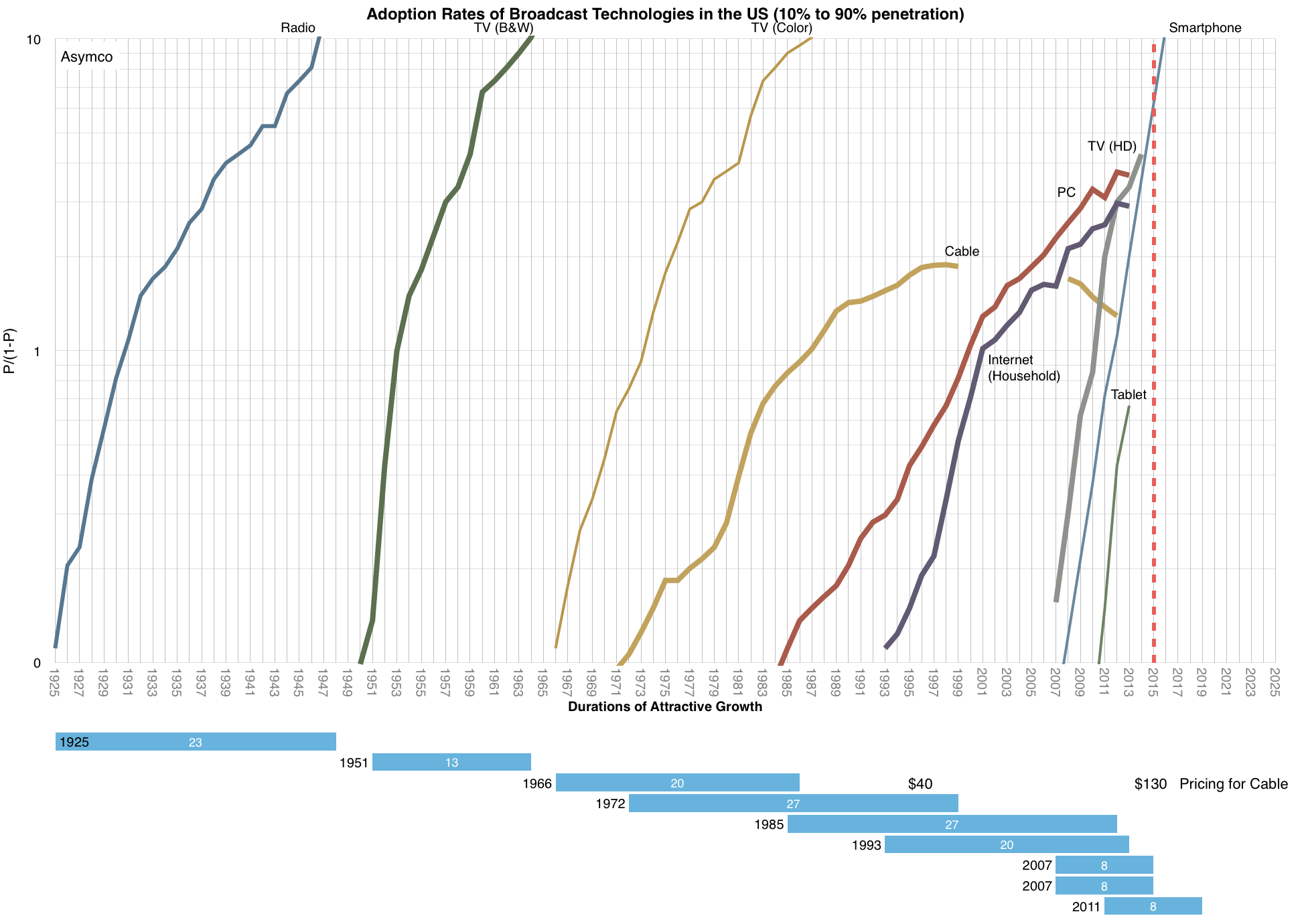
These benefits were very attractive during the 1980s, to the extent that about 60% of US households adopted cable. An additional group later adopted satellite-based pay-TV as the technology became reasonably affordable.
Screen Shot 2015-03-19 at 2.29.06 PM
These benefits were priced modestly but as the quality and breadth of programming increased, prices rose. An average cable bill of $40/month in 1995 is $130 today. Some of that revenue went into upgrading the capital equipment and higher production values, but more went to the sports leagues and their players whose business models increasingly depended on broadcast rights.

And so over a period of about 40 years, watching TV went from free to quite expensive. More expensive even than a family’s communications costs (i.e. telephone service.) That’s quite an achievement at a time when technology disruption caused huge price reductions in other goods and services.

Over time, some of the benefits began to be less relevant. Commercials are more abundant than ever. The quality of the TV picture is actually worse due to compression than one might get with over-the-air digital broadcast. Finally, the abundance of channels is beyond anyone’s absorption rate. Those channels which used to be “pure” became polluted and undifferentiated as each tried to be the other.

On top of these paradoxes is the fact that actual penetration of the service has been declining. As the graph above shows, Cable TV has declined (though Pay TV much less so). The industry has reached saturation decades ago and has not offered anything meaningful in terms of innovation.

Disruption theory suggests that once a product over-serves on meaningful bases of value creation (and underserves on value) it opens the door to disruption. Which leads to the question. Has cable past its prime time? Twenty years have passed since the industry reached saturation and prices keep rising. The average cable bill is projected to rise to over $200/month by 2020.

This has left the industry open for disruption. Users are cutting cords, the “uncabled” or “never-cabled” are a significant portion of the population. 13.5% of broadband households with an adult under 35 have no pay-TV subscriptions. 8.6 million US households have broadband Internet but no pay-TV subscription. That’s 7.3% of households, up from 4.2% in 2010.  Another 5.6 million households “are prime to be among the next wave of cord-cutters,” according to Experian.

The same phenomenon occurred with mobile vs. fixed telephones. For several years it seemed that mobile was sustaining to fixed or that fixed was immune due to lock-ins. The fixed telephone incumbents insisted that the data was inconclusive. Then the trickle of abandonment turned into a waterfall. The quality of service for mobile kept increasing and, with data, it became clear that the mobile devices could unleash a new wave of functionality and value. The same phenomenon occurred again as the music industry shifted from CD’s to digital.

And so it goes. A business dies first slowly then quickly. The exact timing is tricky because of the non-linearity of the phenomenon. It’s also hard to declare end-of-life since business zombies will try to hold on to life as long as possible. What is clear however is that the economics will change dramatically and the alliances between talent and distribution will shift to entrants and away from incumbents. The point when we look back and say that cable as we know it was finished could come by the end of this decade.
Unbundling Pay-TV Brings New Challenges for Media


The media industry is racing toward an Internet-TV future at a breathtaking pace. But the swift changes, highlighted by efforts from Apple Inc., Dish Network Corp. and others, are giving consumers an array of confusing options and forcing entertainment giants to confront some sober realities.

Not long ago, consumers who wanted to watch “Monday Night Football” on ESPN, “Mad Men” on AMC or “Game of Thrones” on HBO knew what they had to do: shell out for a cable package that typically costs around $90 a month in the U.S. They could catch old seasons of popular shows on Netflix or a similar streaming on-demand service, but live, up-to-date programming lived in the cable bundle.

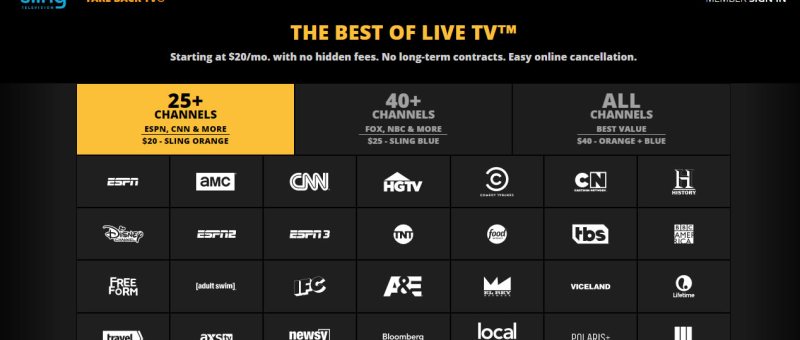
In the span of a few months, tectonic shifts are remaking a television landscape it took decades to sculpt, opening up a range of other possibilities for “cord cutters” who don’t want traditional pay TV. Apple is working on an Internet-TV service with some 25 channels, which is expected to be priced between $25 to $35 a month, according to people familiar with its plans. It will join Dish Network Corp. and Sony Corp., which are pitching their own online-TV bundles. A host of TV companies, including HBO, NBCUniversal, Nickelodeon’s Noggin and CBS, are in the mix with stand-alone streaming offerings.

But if consumers drop pay TV and sign up for TV services delivered over broadband, will they really get a better deal?

“If you buy retail and you have six or seven of these things, that might cost you as much as a bundle that gives you 400 different networks,” said Philippe Dauman, CEO of Viacom, which earns money from bundled channels but also recently launched a subscription streaming service aimed at preschool children that it imagines will be complementary to the bundle.

Sorting through which options or combination of options to sign up for—while keeping costs from spiraling—will be a headache. Dish’s basic $20 a month streaming package will get you ESPN, TNT and some cable channels but not broadcasters CBS, NBC and Fox. Apple wants to bring customers a “skinny bundle” including broadcasters and some cable channels but its service will cost more. Sony will soon offer something more akin to a full-on cable bundle, albeit likely at a higher price than the others—and notably, for now, without Walt Disney Co.’s ESPN and ABC.

On top of all this, consumers will have to factor in the cost of their broadband access. As a reference point, one operator charges $67 a month for a speed of 25 megabits per second once its first-year promotional discount ends.

Still, the new streaming world has the potential to be “better for many consumers” because it offers choice that the pay-TV industry never provided, said Roger Lynch, chief executive of Dish’s Sling TV streaming service. For the “vast majority of all consumers, the pay-TV bundle offers good value. But there’s a growing number of consumers for whom that doesn’t work anymore,” he said.

Media giants have their own calculations to make—quickly—as they prepare for a world that will look very different in 12 months than it has for the past several decades.

For years, TV channel owners and their pay-TV distributors—cable and satellite providers—were able to count on two reliable trends: that pay-TV subscriptions in America would grow each year, and that consumers would submit to paying ever-higher cable bills. In the past two decades, the pay-TV industry has grown by about 40 million subscribers to a total of about 100 million homes, and typical cable bills increased at a compound average annual growth rate of about 6.1%, according to the Federal Communications Commission. Those dynamics produced a steady stream of subscription revenue that drove profits for Disney and Viacom Inc. just as they did for Comcast Corp. and DirecTV.

But evidence mounted over the past couple of years that something fundamental was changing. In 2013, the industry’s base of subscribers contracted for the first time. Last year, pay-TV subscriptions fell by 129,000 industrywide, according to MoffettNathanson, even as analysts said new household formation surged, typically a good sign for the industry in years past.

And besides cutting the cord, more consumers started “shaving” it, downgrading to cheaper packages that operators began to offer. Comcast, for instance, offers an “Internet Plus” package of HBO, fast broadband and local channels for $40 a month, and AT&T has been peddling a similar $49-a-month bundle that also includes Amazon.com Inc.’s Prime free-shipping and streaming-video service for a year.

A mutiny was afoot, threatening the pay-TV fortress. “The ice cube is melting,” one senior industry executive said. “It’s a reality of the marketplace.”

The TV advertising business got a shock as ratings for major cable channels plunged, particularly over the second half of last year. The Cabletelevision Advertising Bureau, an industry trade group, recently told media executives that it estimates 40% of the ratings decline was due to viewers migrating from traditional television to subscription streaming services like Netflix.

“It was happening at a pace no one was anticipating,” said an executive at one big TV network. “We said, ‘We better start finding other ways to grow.’ ”

And with that, media companies that for years had pooh-poohed cord-cutting was a real threat, began to embrace it, albeit reluctantly. HBO, owned by Time Warner Inc., announced its stand-alone Web streaming service in October, followed by CBS, while in the background Dish and Sony assembled rights for their online TV bundles.

The goal for TV channels is to carry out this experimentation while safeguarding the traditional business to the extent possible. Virtually every TV network that has launched a Web TV service says it hopes to target the roughly 10 million homes that subscribe only to broadband service—without encouraging any current pay-TV subscribers to drop their service.

But holding on to pay-TV customers is getting harder. “We think there is going to be a continual dripping, dripping, dripping of millennial consumers and poor consumers who will be outside of the big bundle,” said MoffettNathanson analyst Michael Nathanson in an interview.

One risk of the media companies’ strategy is that by bringing TV channels to the Web they aren’t thinking far enough beyond their current business models. Their real competition for young audiences in coming years will come from companies like Facebook, Vimeo and Vessel that are attracting content creators from entirely outside the pay-TV ecosystem, said Mr. Nathanson and his fellow analyst Craig Moffett.

“Our suspicion is that the millennial cord cutter isn’t waiting around for just the right package of cable channels that only their parents watch,” they wrote in a research note Tuesday.

Not every TV channel is assured a secure place in the emerging Web TV world, analysts say. The small and midtier channel owners—companies like Discovery Communications Inc., Viacom, Scripps Network Interactive, and A+E Networks—will be jockeying to make sure their networks are in the online TV bundles being marketed to the audience of the future.

Some are making headway. Discovery, owner of Discovery Channel, Animal Planet and TLC, and Viacom, owner of MTV, Comedy Central and Nickelodeon, are in talks to be on the Apple service, people familiar with the matter said. Some A+E Networks channels will be added to Sling TV’s core package by the end of March, the companies announced Tuesday.

Read More at WSJ.com

TV Ratings are Falling as SVOD Subscriptions Rise…


TV viewing in the US are on the decline and as TV ratings fall, so does TV advertising revenue, as companies like Fox have experienced this year.

Nielsen’s Q4 “Total Audience Report” released on Wednesday shows a huge drop off in traditional TV viewing as consumers shift their viewing habits from old-fashioned scheduled programming.

American adults still spend a huge amount of time watching TV each day. But the overall levels of viewing (which includes live TV + time-shifted viewing) declined 4.6% year-on-year. That’s compared to a 4.2% year-on-year decline in Q3 and a 2.1% decline in Q2. The level of decline is accelerating.

Excluding time-shifted viewing, total live TV consumption was down 5.5% year on year to 114 billion person-hours of live TV video consumption.

Nielsen time spent with TV

The Nielsen Company

Among younger audiences, the drop off in TV viewing was even more severe: 16% among 18 to 24-year-olds, and 10% among 12 to 17-year-olds.

The steep drop off of traditional TV viewing is correlated with a sharp rise in the number of US homes with access to a subscription video on demand service like Amazon, Hulu, or Netflix. Nielsen says 40% of US homes had access to a subscription video on demand service in Q4 (the pink segment in graph below), up from 36% in the same quarter the previous year.

Nielsen Subscription Video on Demand

The Nielsen Company

Of those with access to video streaming services, Netflix is the most popular option.

Nielsen Netflix Penetration

The Nielsen Company

As you may have noticed from the previous charts, the amount of media consumption per day is actually up as consumers have more choice about the way in which they view content. And the more devices and services they have, the more content they consume.

Nielsen daily screen time

The Nielsen Company

Elsewhere, the amount of time spent on the web and with apps across devices among adults over 18 years old was up 32%, according to estimates from Pivotal Research, which uses Nielsen’s data as a guide. Pivotal says this now equates to 44% of the time spent with TV versus 32% in the year-ago period (although, intriguingly, on Pivotal’s estimates, this represents a sequential decline from 48% in the third quarter.)

An opportunity for TV networks?

hbo now announced at apple event Richard Plepler, CEO of HBO

APHBO CEO Richard Plepler announcing HBO Now at the Apple event on Monday.

Brian Wieser, senior research analyst at Pivotal Research, says in a note: “While declines should level off eventually (and viewing levels would certainly look better if tablets and out-of-home viewing were included in the data; a break-out of viewing of TV content in digital environments would also probably convey something more favorable for legacy providers of TV content), a concern is that if reported viewing levels continue to fall at these levels and if the industry is unable to generally make its case for why advertisers should use the medium, marketers who might otherwise have continued to focus their spending on TV may incrementally look toward other alternatives – namely digital media at a broader level.”

However, Wieser adds that this is a “secondary concern” relative to the broader state of TV advertising, which Pivotal believes is mostly due to the fact that marketers are maintaining tighter cost controls broadly across their entire advertising budgets.

There might be new competitors in the space, but there’s also more ways to get content (and advertising) in front of viewers than ever before — and they’re actively choosing to consume more of it.

And that’s why — as ratings are getting hammered — more and more traditional TV companies are opting to launch streaming services. Most recently, HBO announced HBO Now will be available on Apple devices starting in April.

Read more

Food Network Launches “Discover Food Network” Channel on SnapChat

https://www.youtube.com/watch?v=UbOMqA2AOIk

Popular messaging app Snapchat announced today that it has partnered with top media media brands, including Food Network, in order to launch a new in-app news feature that will allow users to access a collection of the day’s top stories and videos with just one swipe.

The app’s new ‘Discover’ feature includes 12 unique news channels, one for each media partner, plus a dedicated Snapchat channel which will include original content from the app’s creators.

With the move, Snapchat is positioning itself as a media platform — one that reaches an estimated 100-plus million monthly active users. Snapchat Discover will compete with other video platforms and services that encompass video, including YouTube, Facebook and Twitter. Every channel in Snapchat Discover is refreshed after 24 hours, “because what’s news today is history tomorrow,” the company explained.

Food Network is Snapchat’s exclusive launch partner within the food category. The Discover Food Network channel on Snapchat extends the Food Network brand to reach even more young consumers with new and exciting content tailored specifically for that audience. As well as being an engaging new channel for young food fans, Discover Food Network on Snapchat will provide a new opportunity for advertisers to reach engaged young people who love food.

“Food Network has led the dialogue around food for more than two decades, informing and entertaining passionate and engaged fans, and we are excited to bring it to the Snapchat platform,” says Brooke Johnson, President of Food Network & Cooking Channel. “Audiences are more food-conscious than ever before and the Discover Food Network channel on Snapchat will provide users with the great content they love, designed specifically for their mobile devices.”

Users can tap on a channel and swipe left to flip through each channel’s daily edition, containing five to ten stories selected for the service by the Food Network editorial team.

The expectation is that some consumers will discover Food Network content through Snapchat, then seek more through Food Network’s television channels, digital and mobile platforms.

MTV Hopes to Feed ratings with Food Competition

MTV is heading into the kitchen as a contender in food media with two new shows, MTV’s House of Food and Snackdown. According to Variety, both programs will feature a competitive culinary element.

MTV’s House of Food, will incorporate elements of MasterChef,America’s Next Top Model and the network’s own Made. Except it will focus on aspiring chefs who are assigned mentors among top chefs and then compete to win “the apprenticeship of a lifetime.” It’ll join Cooking Channel, which in June broadcast an 8-episode documentary about culinary students called premiered The Freshman Class, in covering the beginning stages of a culinary career Snackdown, which is produced by skateboarder and MTV reality TV regular Rob Dyrdek, will be a 30-minute cooking showdown between amateur chefs. Eddie Huang, owner of Baohaus in New York City and known agitator, will host the program. Model Chrissy Teigen, an outspoken foodist with her own food blog, and chef Jason Quinn of The Playground in Santa Ana are among the panel of judges. The contestants are all vying for a cash prize, their recipe published in the “SNACKDOWN” cookbook, and the coveted golden spork necklace!


The TV revolution has just begun…

Apple’s recent purchase of video-recommendation site Matcha.tv is further evidence of the coming revolution of IPTV.

Matcha.tv is a site that enables people to bring together programming guides for a variety of different services, such as Hulu, Amazon, and Netflix.

Most of the content we now watch on TV, with the exception of live events and sports, is available online somewhere. The challenge for the consumer is finding the content they want to watch across multiple streaming sites (Netflix, Hulu, Amazon, etc) and then playing it on whatever device they choose.

The TV revolution will begin when someone creates a smart software interface that makes IPTV video content search and playback seamless across devices and platforms. The holy grail moment is when someone creates an IPTV platform that is as easy to use as the box in your living room, but extends the viewing experience to whatever device you currently have in your hand.
One thing Apple has done consistently well is to use software to simplify complex technology problems exactly like this.

This past year has bern flooded with rumors of Apple expanding their “experiment” with TV, but this looks like Apple has taken an important step towards starting a true TV revolution.

Americans streaming more content from game consoles

Americans are increasingly spending more time streaming video on gaming consoles. According to Nielsen data, 22% of American users’ overall time spent on gaming consoles in 2012 was devoted to watching video via VOD and streaming services.

This is up from 19% in 2011 and 13% in 2010. When broken down by the major consoles, PS3 users spent 24% of their console time in 2012 streaming content (up from 15% in 2011, representing the highest year-over-year growth among the three major consoles).

In comparison, Xbox 360 users spent roughly 13% and Wii owners devoted 32% of their time streaming content, respectively. Nielsen’s report covers US console users ages 13 and above.

The rise and fall of music format innovation


This is a great visual story of the past 30 years in music formats. Will be interesting to see where it goes next…

Multi-screen marketing requires a new marketing approach

Now more than ever, consumers want content at their fingertips and they can obtain it across multiple screen platforms whether it’s by a television, computer, tablet or mobile phone.

The use of non-screen media has declined by 22% since 2008 while television, computer internet and mobile have increased by one hour and twenty minutes during the same time frame.

Consumers have also become more efficient in multitasking since they can retrieve information various ways. About 40% of consumers use their smart phones or tablets while watching TV.

Video advertisers in the past had only one screen to target: the television. However, the rise of computers and mobile devices has boosted video viewing consumption across devices.

Yet, while the TV is no longer the sole video option for consumers, no single alternative has replaced television as the clear top choice for media consumption. According to a new report from ad network YuMe, 49 percent of all media consumption still comes from a television, 16 percent from the internet.

In addition, the report found that the average American owns close to four devices, and total figures show that there are more than 37 million tablets, more than 86 million PCs and close to 287 million TV sets owned in the United States.

So while the television is still the dominant media consumption option for many Americans, the proliferation of internet-enabled devices has cut into TV’s lead. As a result, consumers see video ads more than ever, which can make one spot appearing on only a TV or a computer less effective. YuMe’s report found that TV ads were only recalled about 27 percent of the time. In comparison internet video ads were remembered 43 percent of the time and mobile video ads had a 35 percent recall rate.

While the proliferation of smartphones, tablets and PCs may seem like it would hurt brands, but the key, is to think outside of traditional siloed efforts and focus on a new approach that reaches consumers across screens.

While TV is still the dominant platform for video, we are rapidly moving from a 100m+ household TV market to a billion+ screen based market. Now is the time for marketers to start thinking differently.

How the Harlem Shake became a global phenomenon

The Harlem Shake is a nearly perfect internet meme because it almost perfectly erases its origins. If every imitation of “Gangnam Style” inevitably leads you back to the deceptively subtle, near-perfect original, the Harlem Shake does the opposite. Every imitation leads you to another imitation, the lower its fidelity the better.

The videos themselves are quite literally viral. A YouTube search for “Harlem Shake” turns up 60,000, with 45,000 uploaded within the last week. One person starts out with symptoms — dancing, a motorcycle helmet, etc. — and within moments, someone else is infected. A few minutes after that, everyone who saw the video has the same idea, and the meme spreads further, a domino effect of cascading bass drops. Like the punchline of a joke, the archetypes propping up a folktale, or even its decades-old namesake dance, the Harlem Shake circulates without an author, needing no authority but its own deliberately stupid sense of fun.

THE HARLEM SHAKE CIRCULATES WITHOUT AN AUTHOR, NEEDING NO AUTHORITY BUT ITS OWN DELIBERATELY STUPID SENSE OF FUN

Of course, this is a lie. Nothing moves without a mover, there are no chickens without eggs. Likewise, there is no breakthrough meme that doesn’t get its velocity from something that’s making it go. And so it is here: a nine-month old, three-minute song called “Harlem Shake,” by a nearly-unknown artist named Baauer, whose freshly-scattered thirty-second fragments of awkward dancing have peppered the video memescape since video blogger / comedian Filthy Frank established the template in a 34-second February 2nd video called “Do the Harlem Shake” that’s already gathered 10 million YouTube views.

It’s Filthy Frank and his dancing posse that everyone’s been imitating and on February 14th, “Harlem Shake” first broke through to number one on iTunes’ best seller list. At the time of this writing, the iTunes charts put “Harlem Shake” at number one overall, in the US, Australia, Belgium, Canada, and Luxembourg, and in the top five in most of the rest of Europe. It’s also crossing over from digital: “Harlem Shake” debuted at number 3 on the BBC’s radio charts on February 17th. In an interview with Billboard, a representative of Baauer’s label, Diplo’s Mad Decent records, describes the song as “the biggest thing we’ve released on Mad Decent as a label, and it’s happened within six days.” Baauer also sold out a February 15th show at New York’s Webster Hall, based almost entirely on the song’s popularity.

Even all those YouTube views, scattered across the dozens or hundreds of fan-made videos, add up. Baauer and Mad Decent have generally been happy to let a hundred flowers bloom, permitting over 4,000 videos to use an excerpt of the song but quietly adding each of them to YouTube’s Content ID database, asserting copyright over the fan videos and claiming a healthy chunk of the ad revenue for each of them. All this happens more or less automatically through Mad Decent’s partner INDmusic, There’s no pressing need to herd fans to a Facebook page or rig the YouTube search to drive “Harlem Shake” queries to an “original”: all of the videos can make the artist and his label a little bit of money. Hence the proliferation of the “Harlem Shake.”

After all, these Harlem Shake videos are just the last link in a chain of gently borrowed content. Before Filthy Frank, it was just a song, and not a terribly lucrative one. Before that, it was just a sample, a young Jayson Musson saying, “do the Harlem Shake” on 2001’s “Miller Time,” a track an even-younger Baauer probably mixed as a Philly-area DJ. Before that, the Shake was just a dance of uncertain provenance, something anyone could reference. But each step meant borrowing from something that already existed. Nobody involved was ever terribly keen on asking for permission. Why would they be? For the most part, neither the borrowers or the lenders even noticed what was happening.

But that open spirit has a limit, and embracing most of the song’s copies doesn’t mean it’s a free-for-all. When hip-hop artist and Harlem native Azealia Banks tried to upload her own remix of the track, Baauer had SoundCloud take it down. When she asked why, his response was simple enough: “It’s not your song.”

As long as it’s Baauer’s song, he’ll decide who can remix, and who else can appear on it. There’s real money and real control at stake here. This means the Shake gets to be open culture and it gets to be big business. But for most people the business, just like the original dance, just fades away.

The Verge